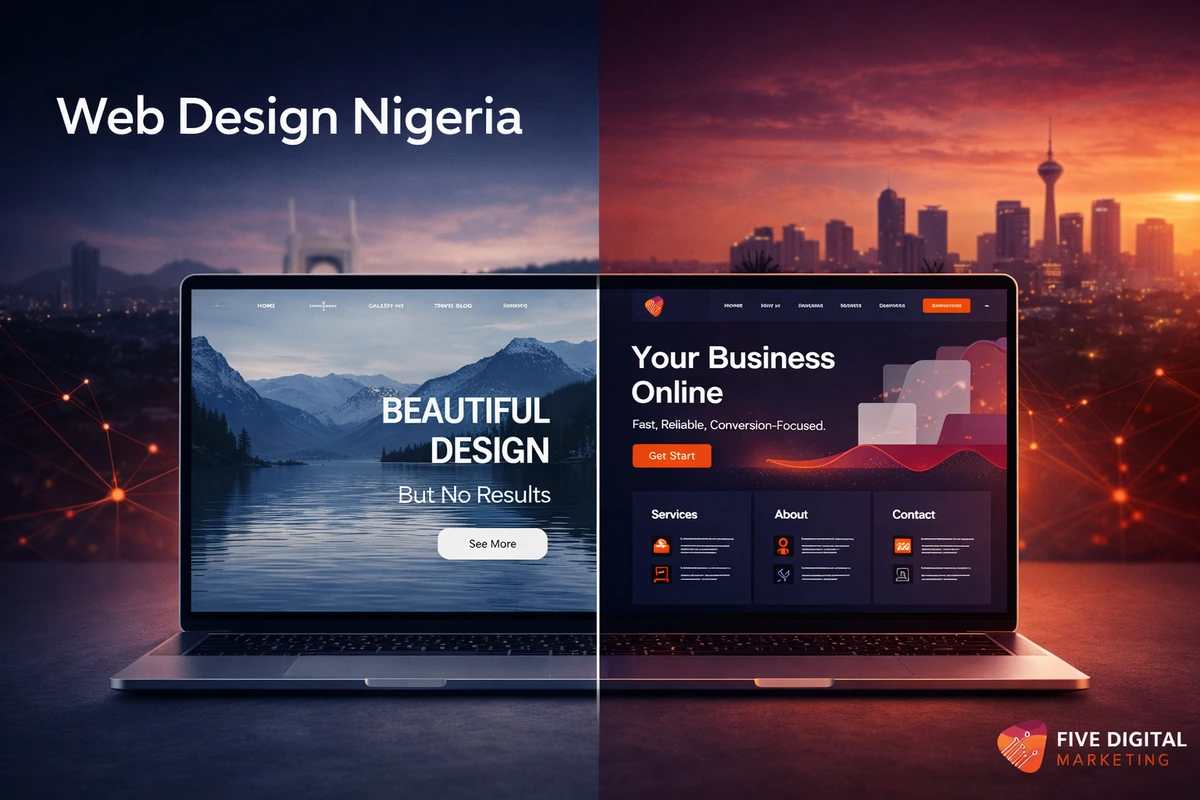
An effective business website does three things: it loads fast, it answers your buyer's question clearly, and it makes the next step obvious. Everything else is secondary. If your website fails those three tests, design polish alone will not fix your lead problem.
In Nigeria, this matters even more because mobile usage is dominant, buyer trust is cautious, and response speed often decides who wins the conversation. A website that looks expensive but creates confusion is decoration. A website that removes friction and captures intent is a growth asset.
The Expensive Decoration Problem
Many businesses in Abuja and Lagos overspend on visual polish and underspend on function. The result is familiar: a polished website, weak inquiry flow, and no clarity on where conversion breaks.
Typical failure pattern:
- headline looks stylish but offer is unclear
- no obvious CTA above fold
- mobile layout breaks under real-world usage
- trust proof appears late or not at all
- form experience is slow or high-friction
Design awards do not generate pipeline. Conversion quality does.
The 5 Non-Negotiable Elements of a Working Business Website
1) Clear value proposition above the fold
Within three seconds, a visitor should understand who you help, what result you create, and what to do next.
2) Mobile-first responsive design
Most first visits are mobile. If the mobile experience is weak, your next-step flow is broken by default.
3) Fast load time
Speed is a conversion control variable, not a vanity metric.
4) One obvious conversion action per page
Competing CTAs reduce action. One dominant action improves clarity and completion.
5) Trust signals near decision points
Premium buyers need evidence: credibility, responsiveness, and process clarity.
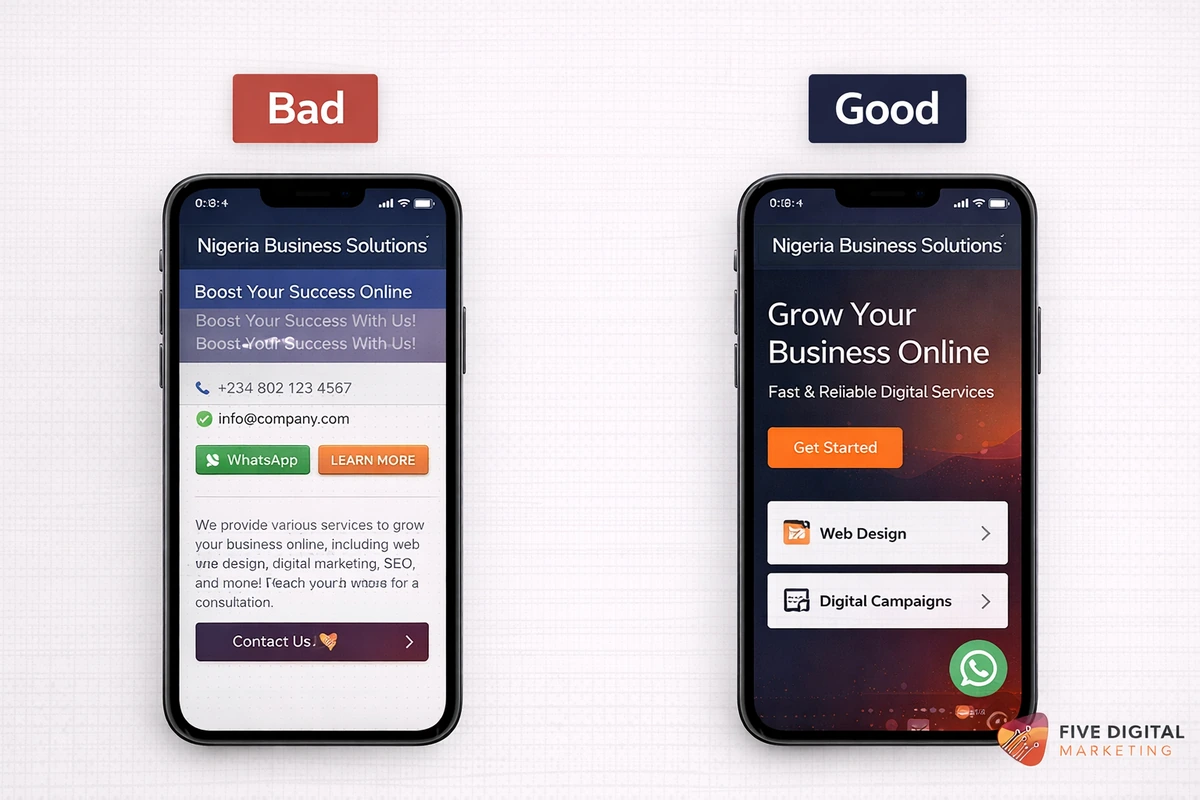
Mobile-First Is Not Optional in Nigeria
If your buyer discovers you from search, social, or maps, their first full visit is usually mobile. Test your page manually on real devices and use Google's mobile-friendly test for quick diagnostics.
Common mobile failures to fix:
- tiny text blocks and weak tap targets
- horizontal scrolling from oversized elements
- CTA buried below noisy layout blocks
- forms that are difficult to complete on phone keyboards
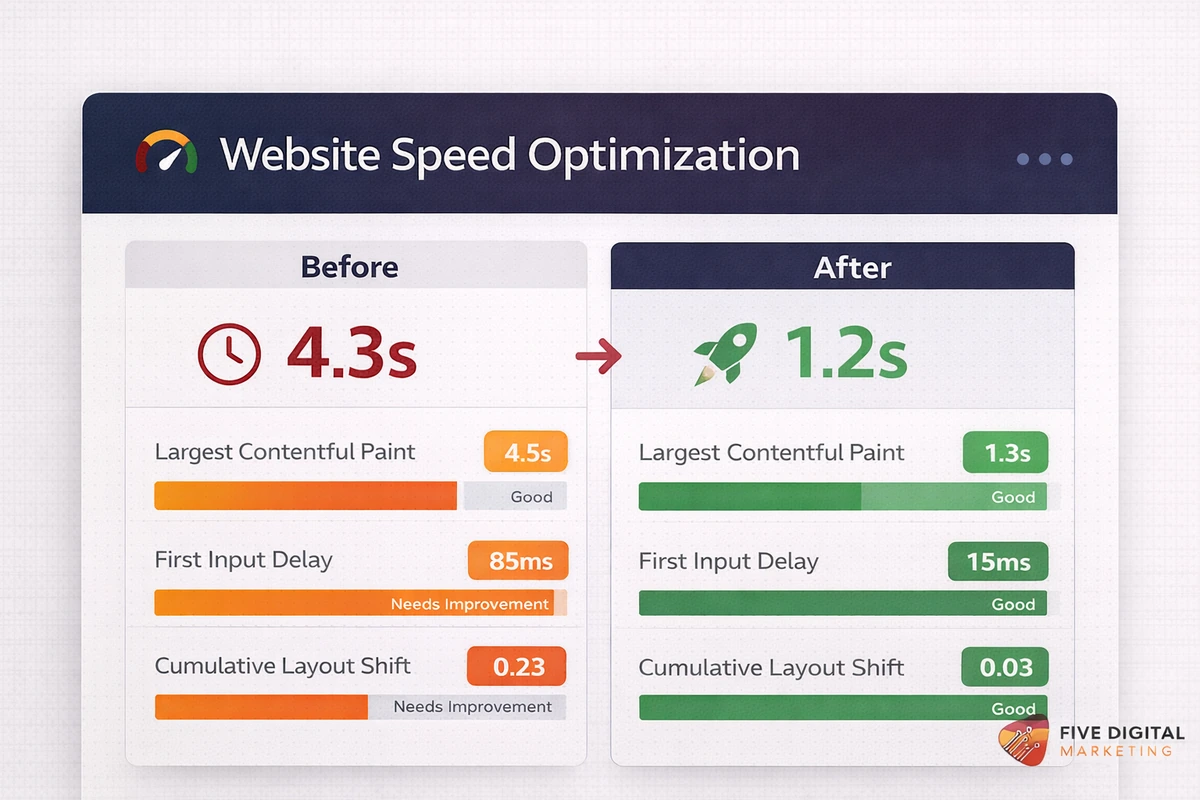
Speed Kills (or Saves) Your Business Online
Slow pages reduce trust and completion. Use Google PageSpeed Insights and monitor Core Web Vitals.
Practical speed wins:
- compress and correctly size images
- reduce unnecessary scripts
- clean CSS and JS payloads
- prioritize performance on mid-range devices
Keep user behavior in mind using research on how quickly users leave web pages.
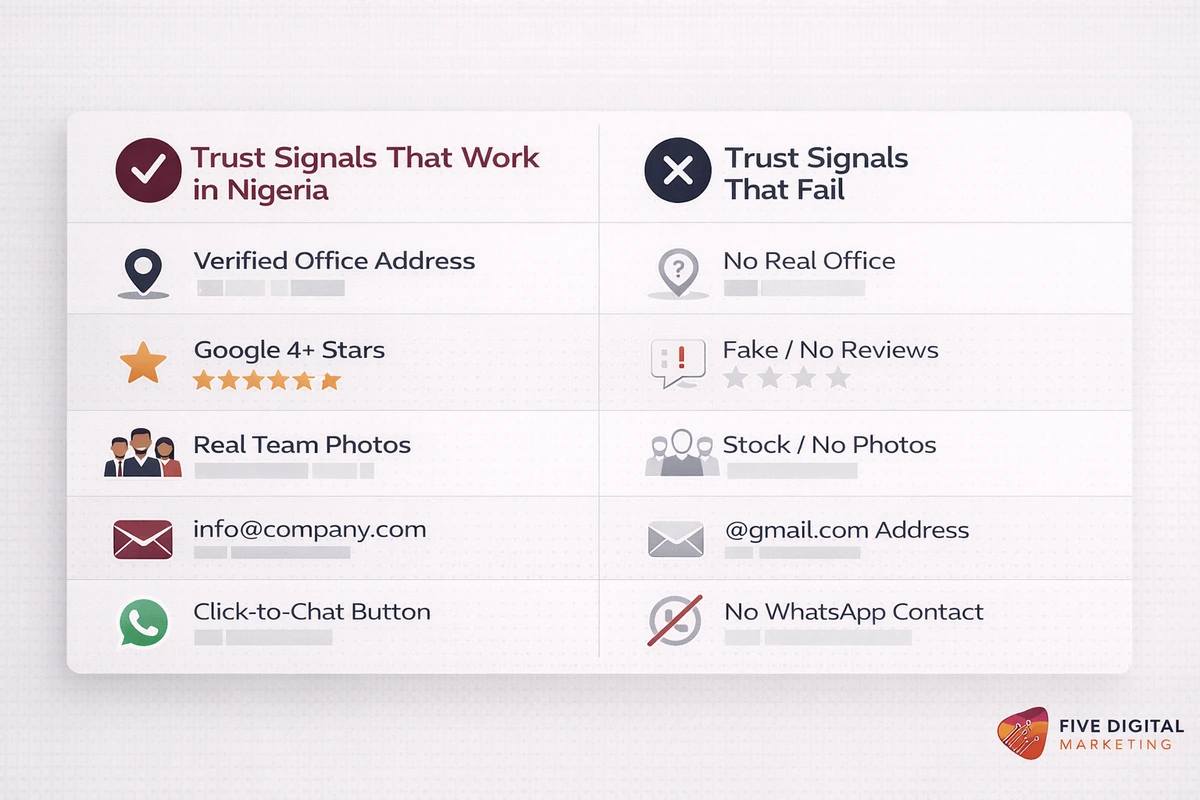
Trust Signals Nigerian Buyers Look For
Trust is the conversion multiplier for premium buyers. Use proof where decision friction appears, not hidden at the bottom of a page.
| Trust Area | What Works | What Fails |
|---|---|---|
| Contact identity | Domain email, active WhatsApp, clear response path | No response expectation, generic contact blocks |
| Business presence | Specific location and service area clarity | Vague global positioning with no local grounding |
| Proof | Credible reviews, case examples, process transparency | Unverified superlatives and abstract claims |
| CTA confidence | Single next step and clear timeline | Multiple competing actions with no direction |
How Nigerian Business Websites Compare to Global Standards
Global UX standards still apply, but local behavior changes execution details. What works globally: clarity, speed, hierarchy, proof-before-pitch flow. What needs local adaptation: stronger location trust cues, WhatsApp next-step flows, and explicit process expectations.
Internal route structure for this post:
Frequently Asked Questions About Website Design in Nigeria
What makes a professional business website in Nigeria?
A professional business website in Nigeria is one that combines clarity, speed, trust, and conversion focus. It should explain your offer in plain language, load fast on mobile devices, show credible trust signals, and make the next step obvious for serious buyers.
Is a website still important if I get most clients through referrals?
Yes, a website is still essential because referral leads verify you online before they contact you. If your website looks weak, loads slowly, or lacks trust proof, referral momentum drops and you lose deals you should have closed.
Should I build my website myself or hire a designer?
Build it yourself if your offer is simple, your budget is limited, and you can maintain quality. Hire a specialist if conversion, speed, and strategic messaging matter. The right decision depends on whether your website is a brochure or a growth channel.
How often should I update my business website?
You should review core pages monthly and update them when offers, proof, pricing context, or buyer questions change. At minimum, publish or refresh useful content consistently so your website stays relevant, visible, and aligned with current demand.
How do I evaluate if a web design agency is the right fit?
Ask how they define conversion, what they track after launch, and how they handle mobile performance and trust architecture. If they can only discuss colors and layout but cannot explain lead flow, they are not the right fit for a revenue-focused website.
What's the realistic timeline for a business website in Nigeria?
A realistic timeline is usually three to eight weeks depending on scope, feedback speed, and content readiness. Fast launches are possible, but quality drops when planning is rushed and conversion structure is treated as an afterthought.
Conclusion: Build for Conversion, Not Decoration
A working website gives buyers clarity, confidence, and one clear next step. Prioritize the non-negotiables, verify mobile and speed quality in real conditions, and treat trust proof as core infrastructure.